Why Firefighter Wellness Should Be Treated Like a Fire Code, Not a Mandate
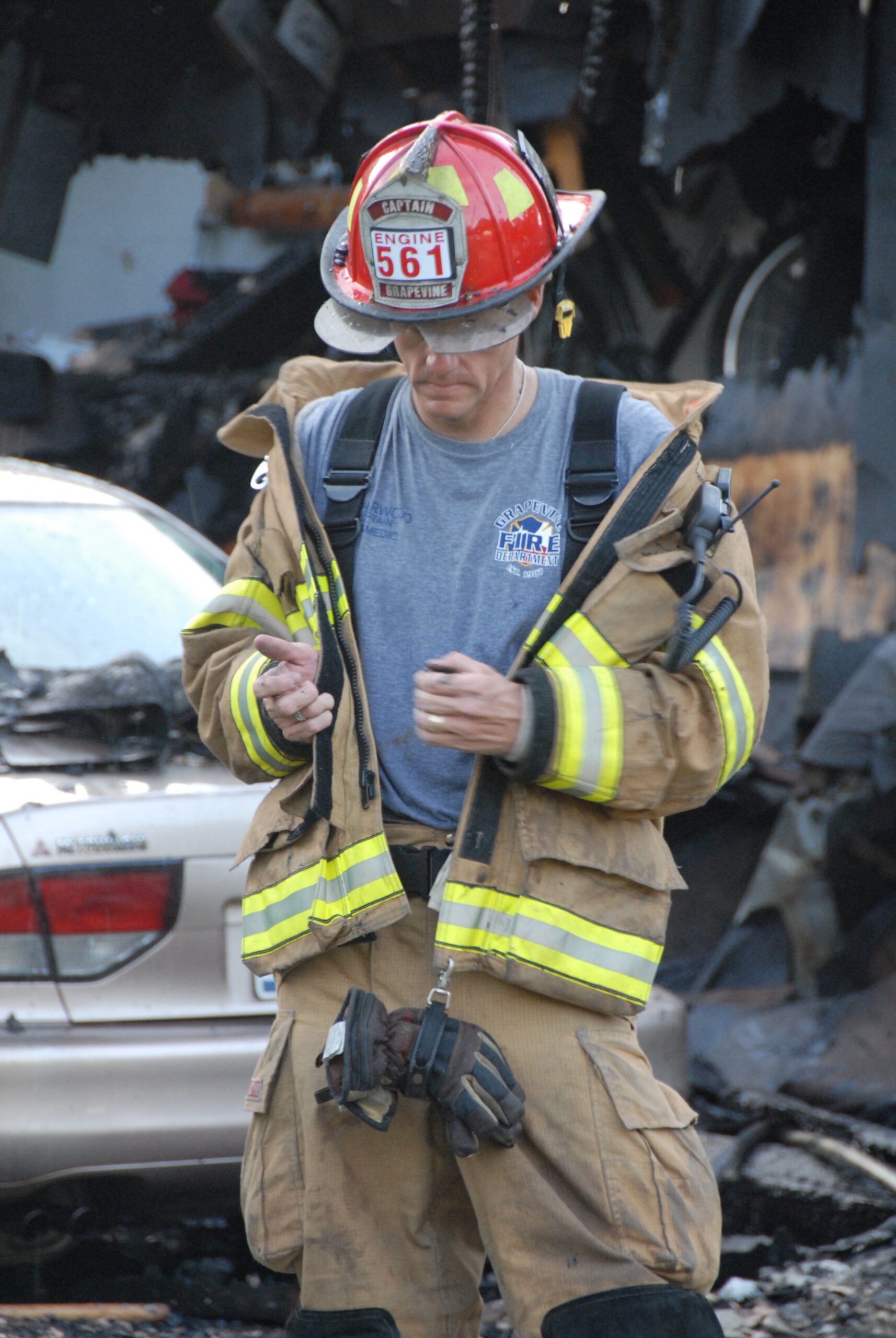 I was recently in a meeting with one of our partner departments that, by policy, required strict use of NFPA 1580 for their annual wellness screenings. As we worked through several practical and operational issues created by that blanket adoption, something became clear to me. No authority fully adopts a model fire or building code in its entirety. Fire marshal offices and authorities having jurisdiction routinely adopt model codes by reference and then amend them to fit local authority, conditions, policy, and resources.
So why should firefighter health and wellness be treated differently?
The 2025 edition of NFPA 1580 is now the consolidated standard combining NFPA 1581, 1582, 1583, and 1584. The consolidated edition provides an important framework for firefighter occupational safety, medical evaluations, and wellness programming. However, treating it as a one-size-fits-all mandate rather than a model standard misses how codes are intended to function. Local adoption allows flexibility and thoughtful modification. What works for one department may not work for a neighboring jurisdiction. Just as with fire and building codes, two neighboring departments can enforce quite different versions of the same model code while still meeting its intent.
Fire and building codes exist because risk is inherent, and firefighting is no exception. NFPA has long acknowledged that fire is an unavoidable part of modern society. It cannot be eliminated, only managed to an acceptable level of risk. Firefighting mirrors that reality. It is an inherently hazardous profession that exposes firefighters to extreme cardiovascular strain, heat stress, cancer-causing contaminants, sleep disruption, and significant mental health challenges. The goal is not to eliminate risk but to manage it intelligently. Annual wellness screenings and fitness programs serve as the risk-management system for firefighter health, much like codes serve as the risk-management system for the code enforcement environment.
Another core principle of NFPA codes is that they establish minimum standards, not ideal or best-case conditions. Fire and building codes do not make structures perfectly safe, they establish a baseline below which risk becomes unacceptable. Firefighter health and wellness programs function the same way. Annual physicals, mental health evaluations, and baseline fitness standards are not designed to create elite athletes, nor are they punitive. They are minimum thresholds meant to reduce preventable injury, illness, and death. Expecting wellness programs to deliver perfect health is no more realistic than expecting a fire code to prevent every fire.
NFPA also recognizes that relying on individual choice or market pressure alone does not produce consistent safety outcomes. Without regulation, safety measures are often delayed, avoided, or unevenly applied. Firefighter health is no different. Without a structured, formal wellness program, firefighters often delay medical care, normalize symptoms, work through injuries, or avoid screenings altogether due to stigma, fear, or cultural expectations. We would never rely on building owners to voluntarily add exits or fire protection systems, and we should not rely on firefighters to self-regulate their health in a profession that historically rewards toughness and endurance.
Risk in the fire service is also not private. It is public. Fire risk affects occupants, firefighters, and entire communities. Likewise, a firefighter’s health impacts more than just the individual. It affects crew safety, incident performance, apparatus operations, public trust, and workers’ compensation and pension systems. An unhealthy building puts responders and the public at risk. An unhealthy firefighter does the same.
There is a hard truth in the fire service that codes are written in blood. Many fire and building code provisions exist because people died. The same can be said for firefighter wellness standards. Cardiac events remain one of the leading causes of line-of-duty deaths. Cancer diagnoses continue to rise. Suicides occur far too often. Musculoskeletal injuries routinely shorten careers. Firefighter wellness programs are not theoretical concepts. They are built on documented fatalities, disability claims, early retirements, and decades of data and research. Ignoring those lessons simply repeats history.
Fire codes also recognize that safety is not static. Building codes address design and construction, but fire codes focus on maintenance, operations, and how conditions change over time. Firefighter health follows the same pattern. Hiring standards establish entry-level fitness and health, but annual wellness screenings are what monitor how conditions evolve over a career. Passing a pre-employment physical, or even a single annual screening, does not guarantee lifelong health. Buildings that passed inspection at construction can still become dangerous. Health, like safety, degrades without inspection and maintenance.
NFPA codes are built around the concept of acceptable risk, not zero risk. Fire codes do not close buildings because they might catch fire. Wellness programs should not remove firefighters because they have risk factors. Instead, screenings identify manageable risks and allow for early intervention. The objective is to keep firefighters working safely for as long as possible, not to exclude them unnecessarily.
That same philosophy is reflected in performance-based options. NFPA allows alternative methods and performance-based designs that meet intent without rigid uniformity. In firefighter health and wellness, this translates to individualized fitness plans, medical accommodations, and return-to-duty programs that allow firefighters to remain employed and retire on their terms. The intent is survivability and longevity, not perfection.
Finally, none of this works without consistent enforcement. Codes that are not enforced are meaningless. Wellness programs that are optional, punitive, or unsupported by leadership are performative at best. For health and wellness programs to succeed, they must be mandatory, non-punitive, confidential, and supported by both department leadership and labor.
In the end, firefighter health and wellness programs are the fire code for firefighter fitness and wellness. Fire and building codes exist because we accept that fire is inevitable. Wellness programs exist because aging, illness, and injury are also inevitable in firefighting. Adopting a modified version of NFPA 1580 is not only acceptable, it is consistent with how every other model code is implemented. NFPA 1580 even allows jurisdictions to achieve compliance through phased-in schedules. Just as we inspect buildings every year because conditions change, we screen firefighters because risk changes. We do not call fire codes punitive to building owners, we call them life safety. Firefighter health and wellness is no different.
John Sherwood, M.S., CFE, FSCEO Chief of Staff, Front Line Mobile Health