
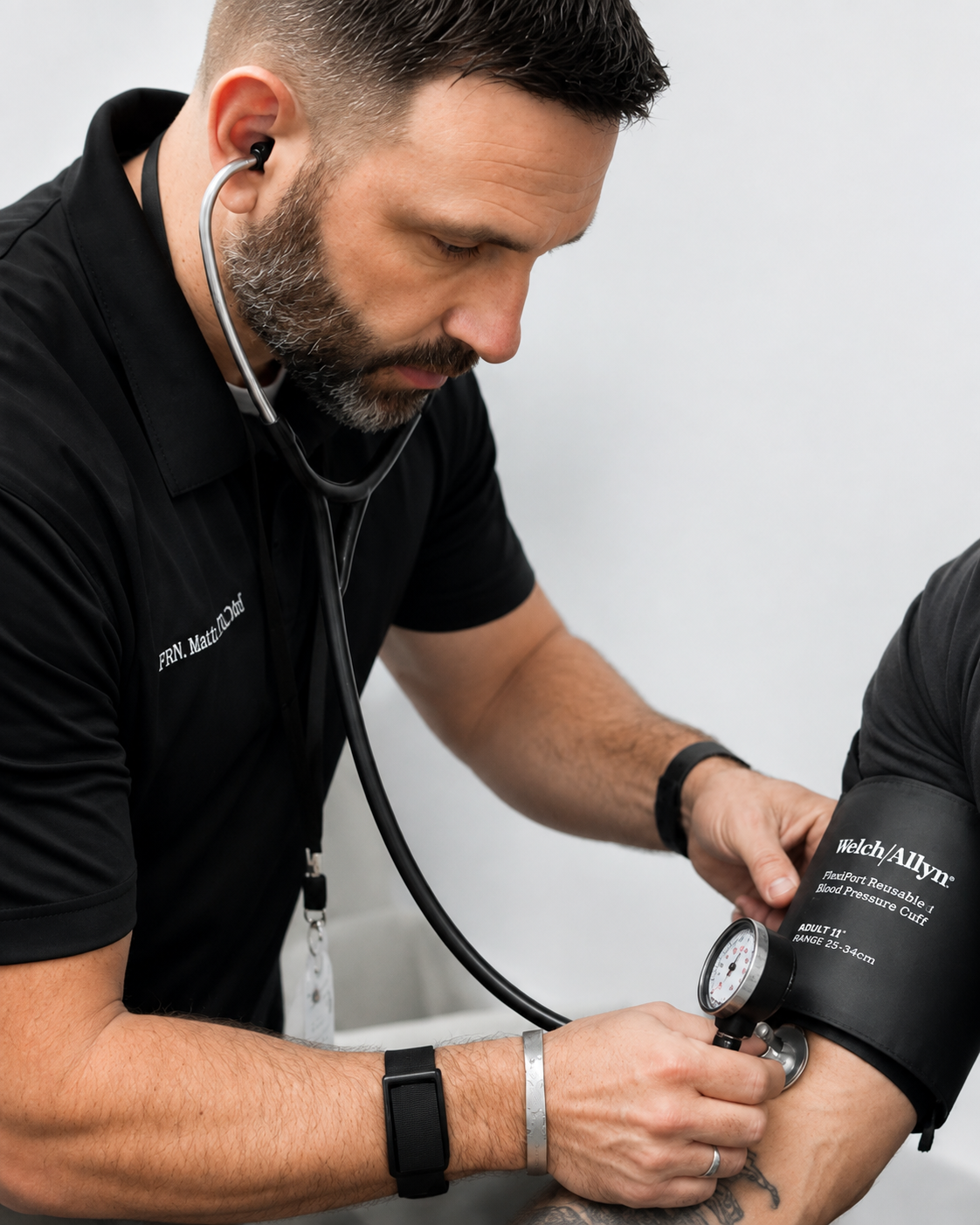
Did you know that Front Line Mobile Health offers more than annual wellness and new hire medical assessments? Our programs help you maximize the health and longevity of your personnel while minimizing wasted taxpayer dollars. We have programs designed to meet the needs of your organization and your personnel at every stage of a public safety career, from hire to retire. In this quarter’s column, I’d like to introduce you to those programs.
Psychological Services
One of the most expensive mistakes you’ll ever make
Let’s face it. If you’ve been an administrative Chief for any length of time, you’ve either made a bad hire or watched one happen. Maybe you caught it early in the interview or background check. Maybe it showed up during onboarding. Maybe it didn’t surface until a year or two later, after that recruit was already out on the line. However it happens, it’s a costly mistake.
A bad hire costs far more than the time spent screening. By our estimates, once a recruit makes it to the line and you must let them go because they aren’t suitable for the job, you may have lost upwards of $200,000 in salary, benefits, and training costs. That doesn’t count the overtime to cover the vacancy, the hit to crew morale, or the time it takes to start the hiring process all over again. In tight budget years, that’s money no department can afford to lose.
One visit, one file
That’s where our Psychological Services division can help. Along with our new hire medical physical, we offer pre-employment psychological testing for both fire and police candidates. After the conditional offer, candidates take a battery of psychological tests. Fire and police candidates are each screened against the demands of their own job, because the stressors on a firefighter aren’t the same as the stressors on a patrol officer.
If your department sends new recruits to Front Line for their new hire medical physical, you can add psychological screening to the same visit. No extra scheduling and no second appointment. You get one file that covers both the recruit’s medical and psychological suitability.
Take it one step further
If you want to go one step further, we offer situational judgment testing. The candidate works through realistic public safety scenarios and chooses how they would respond. Each response is scored on the judgment the job demands. To be clear, this is a judgment test, not a psychological evaluation. It doesn’t replace psychological screening. It adds another layer to it.
The department gets results for every candidate, ranked in order, so the hiring board or Chief can see who should move forward first. Think of it as having a seasoned member watching each candidate work a few calls before you ever make an offer. You’ll learn how they think under pressure, how they treat the public, and whether they make the right call when no one is looking. That’s the kind of information that keeps a bad hire from ever making it to the line.
From hire to retire
Our work doesn’t stop once the recruit is hired. Careers in public safety are long, and the job takes a toll along the way. That’s why our Psychological Services division stays with you and your personnel after they’re on the job. We offer:
- Fitness for duty evaluations
- Promotional evaluations
- Psychological counseling and peer support services
- Post deadly force and critical incident response
- In-service training
- Expert testimony for depositions and hearings
Every Chief knows the call that stays with you. I’ve lived it. Having the right support in place before you need it is better than scrambling after the fact. When a member is struggling, when a fitness for duty question lands on your desk, or when a case ends up in a hearing room, you need a partner who knows public safety and has your back. Pair these services with our annual wellness screenings and Front Line Mobile Health becomes one partner for all your department’s physical and mental health needs, from hire to retire.
You owe it to your people to put the right people beside them. You owe it to your taxpayers to get it right the first time.
Front Line Extended Care (FLEX)
Closing the loop
Finding a problem is only half the job. Every Chief has seen it happen. An annual physical turns up something abnormal, the member gets a referral, they don’t’ meet the requirements in the health and wellness policy. Then, the member is left to figure it out on their own. Days turn into weeks and weeks turn into months. The member is waiting for a specialist, the department is waiting for a clearance letter, and nobody can tell you when that member is coming back to full duty. Meanwhile, the overtime clock is running. That’s why we built Front Line Extended Care, or FLEX. FLEX is a continuity of care model that connects clinical follow-up with operational readiness.
When FLEX engages
FLEX isn’t only for the big findings. It engages at any time a member’s health and their readiness for duty intersect, including:
- Findings from the annual physical
- On-duty or off-duty injuries and illnesses
- Exposure and infectious disease concerns
- Chronic or complex medical conditions
- Workers’ compensation claims
- Return to work clearance exams
- Members who do not meet the requirements of the department’s health and wellness policy
That last one really matters. If your department has a wellness policy with real standards, you need a plan for the members who don’t meet them. A policy without a pathway back to compliance is just a list of rules. FLEX gives those members a path back to full duty and gives the Chief documented proof that the department is managing the risk, not ignoring it.
Here’s how it works
- Identify. We flag the issue, whether it’s a medical finding, an injury, an illness, or an exposure.
- Interpret. We look at that clinical risk against the essential job demands of the member’s position. The question isn’t just “what did we find?” It’s “what does this mean for the job?”
- Coordinate. We work with the member and the department to get them to the right specialist or get them the right treatment. We keep the process moving.
- Close it out. We review the records and documentation, then report the member’s readiness status back to the department.
Four levels of service
Not every department needs the same thing, and not every budget can carry the same load. That’s why FLEX comes in four levels of service, built to meet your department’s specific needs at an affordable price:
- FLEX Surveillance
- FLEX Support
- FLEX Duty Ready
- FLEX Total Care
Think of it like your response plan. The resources you send match the needs of the incident. FLEX works the same way. Start at the level that fits your department today and move up as your program grows.
In public safety, we don’t leave before the incident is under control. We stay until the risk is managed. FLEX does the same thing for your people. It closes the loop between what we find and getting your members back on the line, and it gives you a clear answer on readiness instead of a question mark.
Peak Performance
What about the member whose physical isn’t flagging a problem yet, but is clearly headed toward one? Or the one who doesn’t meet your wellness policy and needs more help to get back on track? That’s where Peak Performance comes in.
Peak Performance is Front Line’s medically monitored weight loss and fitness program, designed specifically for first responders. It isn’t a gym membership or a diet plan. It brings together two things that rarely meet in one place:
- Interventions: prescriptive fitness, evidence-based medicine, nutrition, accountability, and support
- Data: fitness, functional capacity, body composition, clinical labs, and mental health
Where those two meet, your members can get what every Chief wants for them: longevity, performance, and a better quality of life.
As I wrote in January, improving VO₂ max by just one MET or 3.5 points can lower all-cause mortality risk by as much as 10 to 15 percent. Peak Performance turns that research into a plan for each member. And when your Operational Threat Brief shows how many of your people fall below fitness standards or in the poor body composition ranges, Peak Performance gives you a specific answer to bring to your governing body. It also gives you the data to show them the results next year. We want firefighters to live long enough to drain their pensions. Peak Performance is built to help them do it.
How it works
Peak Performance follows three steps:
- Start with a comprehensive consultation. Each member begins with a review of their mental and physical health assessments. A plan is then developed. Prescription medications are added when clinically indicated.
- Stay on track with regular follow-up. Members are supported through our fitness and nutrition app. They are guided and monitored the whole way. During the program, each member gets provider visits, follow-up mental and physical health assessments, InBody scans, labs, and CPET testing as indicated. Progress is measured, not guessed. Most programs last about three months.
- Finish with a written plan. Every member leaves the program with a written succession plan for keeping the gains they’ve made.
That last step is what sets it apart. Anyone can lose weight for three months. The goal is to keep it off for a career and the rest of their life.
Availability
Right now, the fully medically monitored Peak Performance program is only available in Texas. If you’re a partner outside Texas, we haven’t forgotten you. A virtual coaching app is coming soon for members in any state, and we plan to bring the full program to the other states we serve in the near future.
More than an annual physical
Front Line is more than annual wellness assessments. I hope this column gave you a better picture of the programs and services we offer and how they fit together. We start during the hiring process with medical screenings, psychological screenings, and situational judgment testing. We stay with you and your members through our psychological services, FLEX follow-up care, and Peak Performance. Our goal is to meet your department’s needs from hire to retire, and everything in between.
Budgets are tight. Every dollar you spend must earn its place. Each of these programs is built to protect the investment you’ve already made in your people and to give you the data to prove it to your governing body.
If you’d like more information on any of these programs, contact me at jsherwood@frontlinemobilehealth.com. I’m always happy to talk Chief to Chief. If you’d like to reach a program director directly, here is their contact information:
Psychological Services
Dr. Rebecca Blood, rebecca@frontlinemobilehealth.com
FLEX
Christine Cox, ccox@frontlinemobilehealth.com
Peak Performance
Gena Anderson, ganderson@frontlinemobilehealth.com
You owe it to your people.
John Sherwood, M.S., CFE, FSCEO Chief of Staff, Front Line Mobile Health