
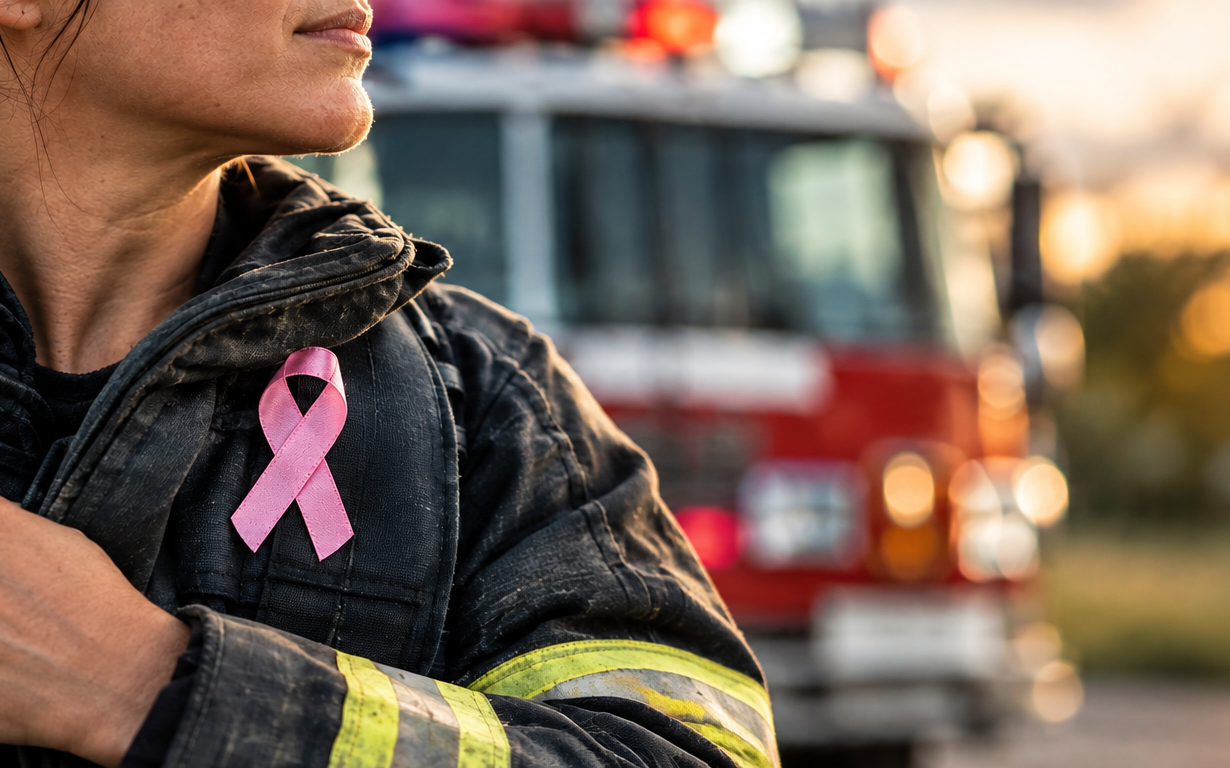
 First Responders are used to pushing through discomfort, working while tired, and putting everyone else’s needs first. That mindset can save lives, but it can also make us dismiss changes in our own bodies. I’ve worn the uniform, cared for first responders as a provider, and have lost too many people I love to breast cancer. I know how easy it is to believe a lump, pain, or change can wait until life slows down. But it never does. And chronic stress can disrupt sleep, influence health behaviors, and make preventive care easier to postpone.
The concern isn’t limited to smoke exposure. There was sufficient evidence for mesothelioma and bladder cancer to show fireground chemicals can damage DNA and interfere with hormone regulation. This is why the International Agency for Research on Cancer (IARC) classified occupational exposures as firefighters are carcinogenic to humans, placing it in Group 1. (Takeaway: men are not excluded from developing breast cancer.)
But did you know night shift work is also recognized as probably carcinogenic to humans as well, making it a Group 2A classification by the IARC? (So, listen up, my Law Enforcement, EMS, dispatch, and corrections peeps! 50% of you work at night!) The concern stems from the stressors produced from working against a normal sleep-wake cycle: increase inflammation, decrease immune functions, and hormonal deregulation. Over time, these combinations can break down defenses (immunity), making way for DNA damage and abnormal cell growth (the crux of what cancer is – uncontrolled growth of abnormal cells.) This is based on limited human data, but should not be ignored when considering what lands in your plate from the risk buffet. And let’s be honest – when you are exhausted, preventative behaviors often get post-poned.
Now let’s add the other risk layers: poorly fitting gear that may allow increased contamination and exposure (particularly in women or any person of smaller stature). Family history. Breast density. Reproductive history. Genetics. Age. Alcohol use. Lifetime hormonal exposures. Years of service. It adds up.
Screening recommendations aren’t identical either, leaving people confused. Most endorse starting screening at age 40 but then vary on how often (annually or every other year) and until what age screening should be repeated. That’s not even the biggest issue though. Here’s the real problem: these guidelines are written for general population and “women considered to be at average risk”. For all their good, the guidelines do not fully account for cumulative exposures, shift work, or equipment history. The National Cancer Institute (NCI) specifically notes that cancer risk models do not include environmental or chemical exposures, occupation, shift work, or years of service. That doesn’t mean those exposures shouldn’t be discussed. I would argue it’s exactly why you need to advocate for yourself on these matters.
Screening recommendations also apply to people without symptoms. A new lump, nipple or skin change, unexplained swelling, or persistent focal pain isn’t a routine screening question. It deserves evaluation now, regardless of your age or when you had your last mammogram.
I’m not suggesting employment as a first responder alone automatically qualifies someone for screening before age 40 or makes every first responder high risk. The truth is that research involving female firefighters is still limited and one reason insurers may not recognize occupational risks alone as justification for additional imaging.
That also doesn’t mean you should accept a one-size-fits-all answer. Ask your provider to document your occupation, your exposure history, your reproductive history, your family history and your breast density. Request a recognized breast cancer risk assessment and ask whether your complete risk profile supports earlier mammography, annual screening, or supplemental imaging such as MRI.
If your physician’s answer is simply, “You’re too young,” don’t be afraid to follow-up with, “what risk information are you actually considering when you say that?” Yes, the research is limited, but limited evidence is not the same as evidence of no risk. These things should never be an excuse to ignore occupational concerns.
Remember: It’s not about the “one call”. It’s about the thousands of exposures and each of your personal risk factors stacked together. If a healthcare professional isn’t willing to have that conversation, find one who will. You’re willing to risk everything for your community. You deserve a provider willing to look at your whole risk profile.
Christine Cox, MSN, APRN, FNP-C, Director, Front Line Extended Care / Staff Provider, Front Line Mobile Health